Crochet is a creative and relaxing craft that allows you to turn simple yarn into beautiful handmade projects. Whether you want to make blankets, bags, clothing, accessories, or amigurumi, learning the right crochet techniques will help you work with greater confidence and create more professional results.
For beginners, crochet may seem complicated at first. However, once you understand a few essential techniques, many crochet patterns become much easier to follow. In this guide, we’ll explore some of the most important crochet techniques every beginner should learn.
1. Making a Slip Knot
The slip knot is usually the first step in a crochet project. It creates an adjustable loop that you place on your crochet hook before starting your stitches.
Learning how to make a secure but adjustable slip knot is important because it gives you a good starting point for your project.
2. Creating a Chain Stitch
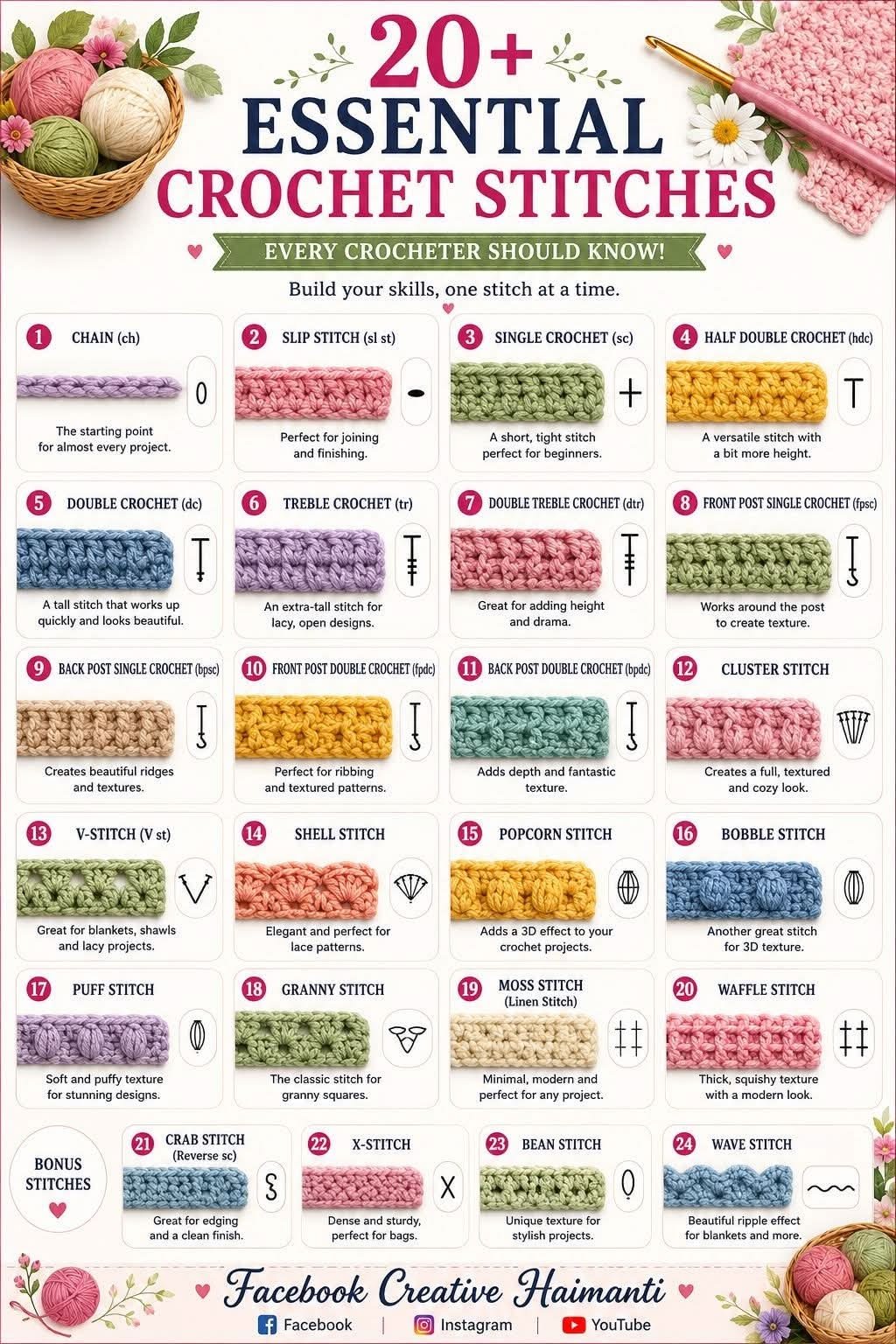
The chain stitch is one of the most basic crochet techniques. It is commonly used to create the foundation chain at the beginning of a project.
To make a chain, place the yarn over your hook and pull it through the loop already on the hook. Repeat this process until you have the required number of chains.
Chain stitches are also used to create spaces and turning chains in many crochet patterns.
3. Single Crochet
Single crochet is one of the easiest and most useful crochet stitches. It creates a relatively dense fabric and is commonly used for bags, amigurumi, accessories, and other projects.
Because it is simple to learn, single crochet is an excellent stitch for beginners who are practicing their tension and basic movements.
4. Half Double Crochet
Half double crochet creates a fabric that is taller than single crochet while remaining relatively dense.
This technique is useful for blankets, scarves, sweaters, hats, and many other projects. It also allows you to work relatively quickly compared with shorter stitches.
5. Double Crochet
Double crochet is another essential technique that every crocheter should learn. It creates taller stitches and a more flexible fabric.
Double crochet is particularly popular for blankets, shawls, garments, and decorative patterns. Once you understand it, you can start experimenting with many different crochet designs.
6. Slip Stitch
The slip stitch is a short stitch that is often used to join crochet work together.
It can be useful when working in rounds, joining motifs, moving across a row without adding height, or creating simple decorative details.
Although it is small, the slip stitch is an important technique to understand.
7. Increasing Stitches
Increasing means adding stitches to your work. It is an important technique for changing the shape and size of a crochet project.
For example, increases are commonly used when making circles, baskets, hats, amigurumi, and other projects that require a wider shape.
A basic increase can often be made by working more than one stitch into the same stitch.
8. Decreasing Stitches
Decreasing is the opposite of increasing. It reduces the number of stitches in a row or round.
This technique is useful for shaping crochet projects. You may use decreases when creating the top of a hat, shaping clothing, making amigurumi, or creating different types of crochet designs.
Learning both increases and decreases gives you much more control over the shape of your projects.
9. Working in Rounds
Many crochet projects are created by working in rounds instead of straight rows.
Working in rounds is especially common for hats, baskets, bags, coasters, amigurumi, and circular motifs.
Beginners should learn how to start a round, join rounds when necessary, and keep track of their stitches. Stitch markers can be very helpful when practicing this technique.
10. The Magic Ring
The magic ring, also called a magic circle, is a popular technique for starting projects that are worked in the round.
It creates a small adjustable center that can be tightened after the first stitches are made. This makes it particularly useful for amigurumi, flowers, granny-style motifs, and circular designs.
It may take a little practice at first, but it is a very useful technique to add to your crochet skills.
11. Changing Colors
Changing yarn colors can completely transform the appearance of a crochet project.
You can use different colors to create stripes, patterns, flowers, geometric designs, or decorative details.
When changing colors, it is important to make the transition neatly and secure the unused yarn so it does not become loose later.
12. Joining Crochet Pieces
Some projects require several separate crochet pieces to be connected together.
There are different ways to join pieces, including slip stitching, sewing with a yarn needle, and other decorative joining techniques.
The best method depends on the project and the appearance you want to achieve.
13. Weaving in Yarn Ends
Once you finish a crochet project, you will usually have loose yarn ends that need to be secured.
Weaving in the ends with a yarn needle helps prevent your stitches from coming undone and gives the finished project a cleaner appearance.
This simple finishing technique is an important part of creating durable handmade crochet items.
14. Blocking Crochet Projects
Blocking is a finishing technique used to improve the shape and appearance of crochet work.
Depending on the yarn and project, blocking can help straighten edges, improve the shape of motifs, and make stitches look more consistent.
It is particularly useful for garments, shawls, blankets, and decorative pieces.
Tips for Learning Crochet Techniques
Learning crochet takes practice, so don’t worry if your first attempts are not perfect. Here are a few tips that can help:
- Start with simple projects.
- Practice one stitch at a time.
- Count your stitches regularly.
- Keep your yarn tension comfortable.
- Use stitch markers when working in rounds.
- Follow beginner-friendly crochet patterns.
- Practice with medium-weight yarn and an appropriate hook.
- Don’t be afraid to undo a few stitches and try again.
Final Thoughts
Learning essential crochet techniques is the foundation for becoming a confident crocheter. From making chain stitches and basic crochet stitches to increasing, decreasing, changing colors, and finishing your work, each technique gives you more possibilities.
Start with the basics and practice regularly. As your skills improve, you can experiment with more advanced techniques and create increasingly detailed crochet projects.
The most important thing is to enjoy the process. With patience and practice, even a beginner can turn a simple ball of yarn into something beautiful and handmade.